

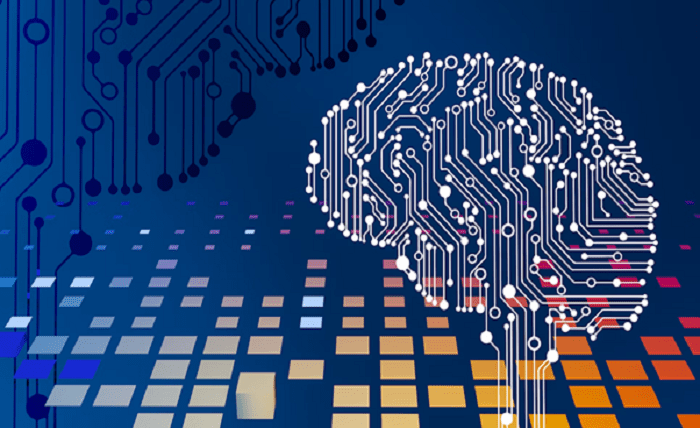
Artificial Intelligence (AI) stands as one of the most transformative technologies of our time, reshaping industries and revolutionizing the way we interact with technology. Whether you need something to be done by the AI or playing a game of tongits or chess against one, it is a journey from theoretical concept to practical applications that has been marked by significant milestones and breakthroughs, fundamentally altering the landscape of human-machine interaction.
Origins of Artificial Intelligence:
The seeds of AI were planted in the mid-20th century, as pioneers like Alan Turing and John McCarthy laid the groundwork for the field. Turing proposed the famous Turing Test in 1950, a benchmark for determining a machine’s ability to exhibit intelligent behavior equivalent to, or indistinguishable from, that of a human. McCarthy, often dubbed the “father of AI,” coined the term itself in 1956, laying the foundation for formal research and development in the field.
Early Developments:
The 1950s and 1960s saw the birth of early AI programs, focusing primarily on tasks like game playing, theorem proving, and symbolic reasoning. Programs like the Logic Theorist and General Problem Solver demonstrated rudimentary problem-solving capabilities, albeit within narrow domains. However, progress was slow due to limitations in computing power and the complexity of modeling human intelligence.
Rise and Fall:
The 1970s and 1980s witnessed both optimism and skepticism towards AI. Expert systems emerged as a dominant approach, employing rule-based systems to mimic human decision-making in specific domains. However, the limitations of these systems soon became apparent, as they struggled with uncertainty, context switching, and adapting to new situations. The field entered a period known as the “AI winter,” marked by reduced funding and waning interest as expectations failed to match reality.
Resurgence and Modern Applications:
The late 20th century and early 21st century witnessed a resurgence of AI, driven by advancements in computing power, algorithmic innovations, and the availability of vast amounts of data. Machine learning, particularly deep learning, emerged as a dominant paradigm, enabling systems to learn from data and improve performance over time. Breakthroughs in neural networks, fueled by techniques like backpropagation and convolutional neural networks (CNNs), revolutionized tasks such as image recognition, natural language processing, and speech recognition.
Contemporary Applications:
Today, AI permeates virtually every aspect of our lives, from personalized recommendations on streaming platforms to autonomous vehicles navigating city streets. In healthcare, AI is accelerating drug discovery, improving diagnostics, and personalizing treatment plans. In finance, it powers algorithmic trading, risk assessment, and fraud detection. In manufacturing, AI-driven robots optimize production processes and enable predictive maintenance. In customer service, chatbots and virtual assistants enhance support experiences and streamline interactions.
Future Prospects:
The journey of AI is far from over, with ongoing research focusing on advancing capabilities such as explainability, robustness, and ethical considerations. As AI becomes more pervasive, questions surrounding its societal impact, job displacement, and ethical use continue to shape the discourse. However, with responsible development and thoughtful implementation, AI holds the potential to address some of humanity’s most pressing challenges, from healthcare and education to sustainability and beyond.
Conclusion
From its humble beginnings as a theoretical concept to its current status as a transformative force, the evolution of artificial intelligence reflects the ingenuity and perseverance of human creativity. While the path forward may present challenges and uncertainties, the promise of AI to reshape industries, empower individuals, and enhance our collective well-being remains undeniably compelling. As we navigate this journey, guided by principles of collaboration, innovation, and ethical stewardship, the future of AI holds boundless possibilities, limited only by our imagination.